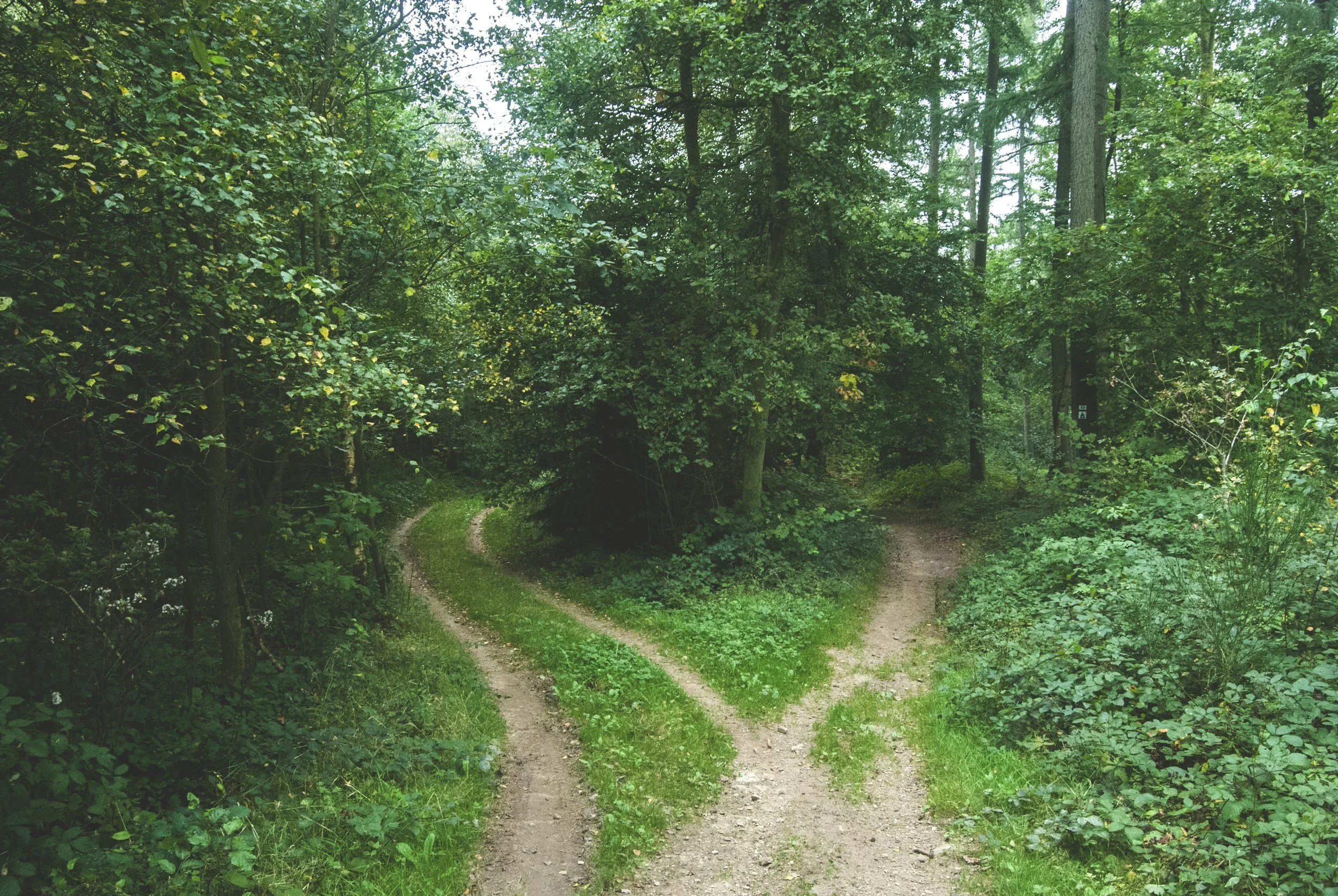
When There Is No Map: Learning to Navigate Uncertainty
There is a specific helplessness that comes with a decision big enough to change the
shape of your life.
Whether to leave. Whether to stay. Whether to take the job, have the child, end the
thing, begin the other thing. Standing in front of a choice like that, most people want the
same impossible object: a reliable account of how it turns out. Not advice, advice is
easy to come by. What you want is to know, in advance, which path leads where, so that
you can choose the good one and be spared the mistake. You want a map.
The trouble is that for the decisions that matter most, there is no map, and there cannot
be. A map describes terrain that already exists and has already been walked. The
territory of your own unlived life has neither property. No one has crossed it, least of all
you, and the route you are straining to see ahead of time does not exist yet it is made
partly of choices you have not made and consequences that have not happened. Waiting
for the map is waiting for something that was never going to arrive.
This is where a quieter distinction becomes useful: the difference between having a map
and being able to navigate.
A map gives you the whole route in advance. A compass gives you almost nothing by
comparison only which way you are facing, right now, from where you actually stand.
And yet a compass is what people have used to cross terrain no one had charted: not by
knowing the route, but by knowing their direction, taking a step, and checking again.
Navigation is not possession of the route. It is the capacity to move sensibly without one
to orient from where you are, choose a direction you have some reason to trust, go far
enough to learn something, and let what you learn correct the next step.
Most people are better navigators than they believe, and worse at waiting for maps than
they fear. The paralysis that grips us before a large decision is usually not an inability to
choose. It is the conviction that we must choose correctly, once, in advance, with an
assurance the situation cannot give and that a wrong step is therefore a failure rather
than information. But navigation has never worked that way. A course correction is not
evidence that you chose badly at the start. It is the method. You could not have known
what you now know until you moved enough to learn it, which means the earlier choice
was not a mistake to be avoided but the only way the later clarity was ever going to
become available to you.
This quietly changes what a decision even is. We tend to treat a major choice as a single
act with a right answer and a wrong one, to be gotten right the first time and regretted if
it isn’t. Navigation treats it as the first move in an ongoing correction, a direction
chosen thoughtfully, then adjusted as the terrain reveals itself. The demand to get it
right in advance assumes you get one attempt and must not waste it. The truth is closer
to the reverse: you get many small attempts, each teaching you something the last one
could not, and the skill was never choosing flawlessly. It was staying oriented, and
remaining willing to learn as you go.
None of this makes the hard choices easy, and it is not meant to. Some directions
genuinely cost more than others, and no amount of good navigation guarantees a gentle
passage. What it offers is more modest, and truer: a way to move at all, when the map
you were waiting for is not coming, and a way to hold your own wrong turns as part of
finding the way, rather than as proof you should never have set out.
A Question to Sit With
Perhaps the question isn’t which path is the right one - you cannot see far enough
down either to know. Perhaps it’s whether you have been waiting for a map that was
never going to come, when what you already have is a direction you could begin to trust,
and the capacity to correct your course as you go.